
Issue 32 - Summer 2026

L'été, lorsque le jour a fui, de fleurs couverte
 In summer, when day is done, from the flower-covered
La plaine verse au loin un parfum enivrant ;
 meadow in the distance pours an intoxicating scent.
Les yeux fermés, l'oreille aux rumeurs entr'ouverte,
 With eyes shut, ears half-open to murmurs,
On ne dort qu'à demi d'un sommeil transparent.
 One could sleep only in a limpid slumber.

Les astres sont plus purs, l'ombre paraît meilleure ;
 The stars are pure, the darkness appears better;
Un vague demi-jour teint le dôme éternel ;
 some sort of half-light tinges the eternal dome;
Et l'aube, douce et pâle, en attendant son heure,
 And the dawn, gentle and pale, biding its time,
Semble toute la nuit errer au bas du ciel.
 Seems to wander all night at the foot of the heavens.

- Victor Hugo (1802 - 1885), "Nuits de juin" translated by David K. Smythe, set in Benjamin Britten’s Quatre chansons françaises
Dear Art Song Canada readers, welcome to our June potpourri issue. In it, we bring you reflections on song from three prominent figures shaping the world of art song today. First, esteemed pianist Kathleen Kelly takes inspiration from Virginia Woolf to reflect on the role of the collaborative pianist today. Then, Shannon McGinnis of Art Song Chicago discusses her innovative partnerships with Roosevelt University and what young musicians can learn from sharing art song with audiences. Finally, Patricia Caicedo, founder of the Barcelona Festival of Song, tells about her pioneering work championing Latin American art song. And that’s not all! In our Introducing… column, soprano Catherine St-Arnaud illuminates the beautiful world of Rita Strohl’s Bilitis (yes, that same Bilitis that Debussy famously loved so much!).1
As always, we hope this issue inspires you and reminds you of the boundless potential of the art song genre. If you enjoy this issue, please consider donating to support the Art Song Foundation of Canada’s bursary programs for young Canadian singers and pianists. ¡Vamos!
— Sara Schabas, editor
The Angel at the Keyboard by Kathleen Kelly
“I heard that, if your pianist is good, the judges think you sang better.”
I caught those words while pushing through the hallway throngs at a regional conference and competition, on my way to perform Dominick Argento’s From the Diary of Virginia Woolf. After the concert, I got a common compliment which always feels bad to me:
“Great job! That piece takes a real pianist!”
We’re pianists until we’re part of a duo, then suddenly we’re collaborative pianists or accompanists; suddenly, the semantics are a whole situation. Why do we need a title to explain the exact meaning of our pianistic contributions? This isn’t about personal feelings; pianists who work in partnerships continue to experience real, tangible effects on their careers from this implied secondary status.
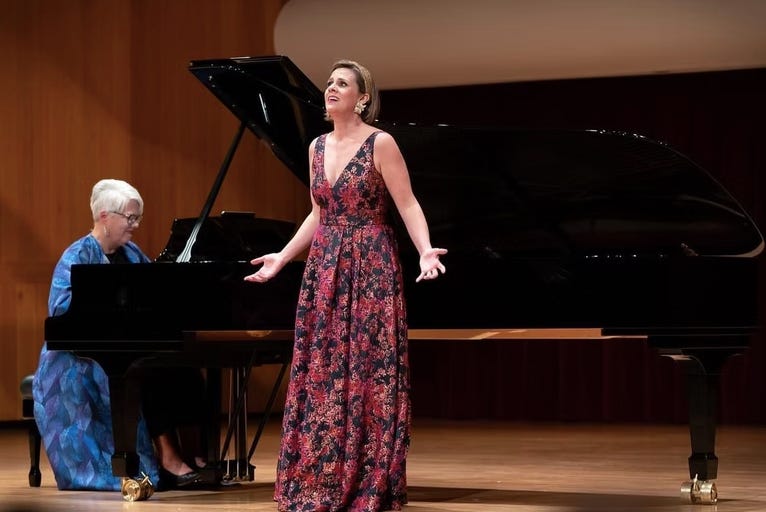
I wondered what Virginia Woolf would make of it all. I’d been re-reading her in preparation for the Diary performances, including her essay “Professions for Women.” In it, she conjures up the “angel in the house,” a picture of ideal Victorian womanhood:
“…She sacrificed herself daily…she never had a mind or a wish of her own, but preferred to sympathize always with the minds and wishes of others.”
Woolf said that to become a writer, she had to kill that angel, overcome her social training, and shut out the soft voice in her ear exhorting her to flatter critics and moderate her views. I appreciate Virginia Woolf admitting how hard she battled to kill the angel: “She was always creeping back when I thought I had dispatched her.” Those Victorian ideals live in our own heads; that angel is always just around the corner.
It’s not lost on me that most of the music we use at classical competitions and in concerts is straight out of the Victorian era, as is the piano we play. In fact, that piano was the most acceptable instrument for young ladies to study in the 19th century, an appropriate vehicle of expression for women trained to modulate their voices and modify their opinions. The big wood-and-steel contraption had the added benefit of obscuring their bodies. Women pianists were angels sitting demurely on their benches, singing sweetly and disappearing at the same time (picture Francesca Bridgerton).
We built a whole profession around those angels. And by we, I mean pianists. Specifically, solo pianists: the solo recital developed in the 19th century right alongside the angels. Some renowned soloists kept a vestige of the old soirée musicale model; Clara Schumann’s concerts, for example, almost always had a singer designated as her assistant. But more and more often, pianists were on stage alone, turning up the virtuosity, building major fanbases, and jacking up the fees (classical piano stars are still by far the richest instrumentalists in the business). Certainly they were influenced by the century’s greatest rock star, Franz Liszt, who like his son-in-law Richard Wagner was packaging his concerts as church, his venues as temples, and himself as a high priest. Other instrumentalists taking the concert stage began to position themselves in a similar kind of spotlight, which could require their duo partners taking a humbler attitude on stage.
In the century of Victoria, when the image of a demure woman at a keyboard was available in every bourgeois sitting room, song accompaniment became coded as female even if its practitioners included men and women. Like other “helping” professions requiring high expertise, accompanists came to be seen as subordinate to the soloists they supported. As they acted out their supporting roles, dressed in black, hair pulled back, bowing when acknowledged, they and their work began to disappear.
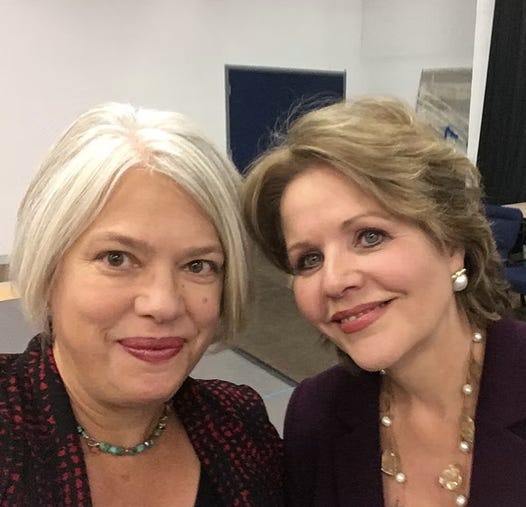
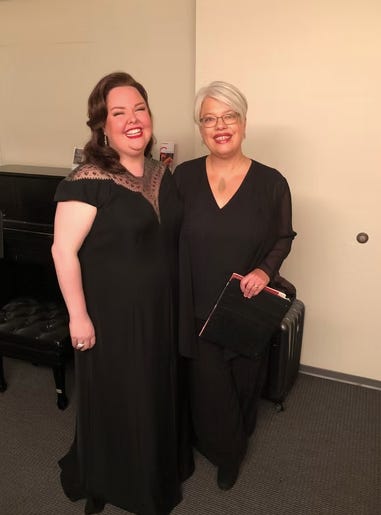
Of course, the world is never just one thing. Plenty of soloists advocate for equitable fees with their duo partners. Institutions are trying to create jobs that will sustain and support the skilled pianists they need. But collaborative piano jobs with large workloads and shocking compensation are still advertised on the regular. Pianists are still told not to dress or move in a way that draws any attention away from soloists.
Woolf tried to banish the “angel” with words. That’s what we’ve been trying to do, I think, with terms like “collaborative pianist.” What if it’s not what we call pianists, but rather how we talk about the work? What if every soloist/pianist pair was a duo? What if piano parts - and pianists - didn’t have to be virtuosic to be considered “real?” What if teachers encouraged students to learn pianists’ music, to know their physicality at the keyboard, as part of great chamber music practice? Might that not have a downstream effect on everything from advance planning to rehearsal preparation?
Forget pedestals. Let’s not miss the chance to truly connect with our partners, and to create environments where such connection is possible.
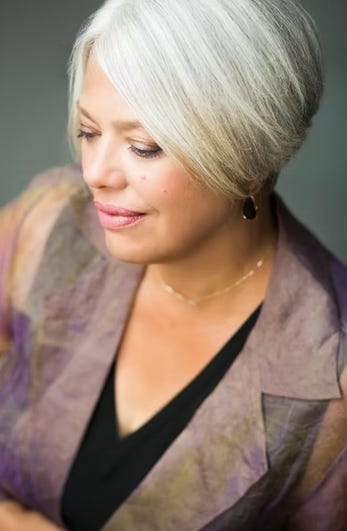
Kathleen Kelly’s practice combines her skills as pianist, coach, conductor, writer, and advocate. During the 2025-26 season, she will join both Jamie Barton and Ryan McKinny in recitals, lead the Texas premiere of Notes on Viardot for Baylor Opera Theater, and return to the New National Theater Opera Studio in Tokyo to lead performances of Gianni Schicchi. She also introduced the groundbreaking Collaborative Piano Playbook for the International Keyboard Collaborative Arts Society with co-author Elvia Puccinelli. Recent notable projects include her chapter on current industry practice for Chanda Vanderhart’s book Accompaniment in America, her acclaimed recording FORCE OF NATURE with soprano Emily Albrink, and her performance in the filmed opera INTERSTATE. Her international performing credits include appearances at Wigmore Hall, Weill Hall, Zankel Hall, the Kennedy Center, Spivey Hall, and Vienna’s Musikverein. She has been part of the musical teams at the San Francisco, Metropolitan, Houston Grand, and Vienna State Operas, and is a regular guest coach for the New National Theater Tokyo Opera Studio. Her work has been published in VAN Magazine and The Journal of Singing. She is the Director of the Vocal Studies Division at Baylor University.
The Room Where Art Song Lives: On Performance, Partnership, and Community by Shannon McGinnis, Co-Founder, Art Song Chicago; Associate Dean, Chicago College of Performing Arts at Roosevelt University
When I co-founded Collaborative Arts Institute of Chicago – now Art Song Chicago – in 2010, it was to give an audience to an art form that I love, and to the artists who research, practice, and perform it with devotion and skill. I worked to build programming that turned the question “Why art song” into action: master classes and workshops, a Vocal Chamber Music Fellowship, and recently Songs@Six, delivered in partnership with the Chicago College of Performing Arts at Roosevelt University, where I serve as Associate Dean. Songs@Six was my last initiative as ASC’s Director of Education, and in many ways my most personal - a direct expression of what I believe higher education owes to young artists who have chosen to engage with one of the most demanding and rewarding areas of the classical repertoire.
That belief is simple: The song recital should not live and die in the conservatory. If all goes as planned, students emerge from training with technical fluency and stylistic breadth; yet true artistry asks questions that take a lifetime to answer. The recital-as-endpoint model, the jury as final arbiter, the degree as destination... these frames can inadvertently suggest that mastery is a place you arrive at rather than a practice you sustain.
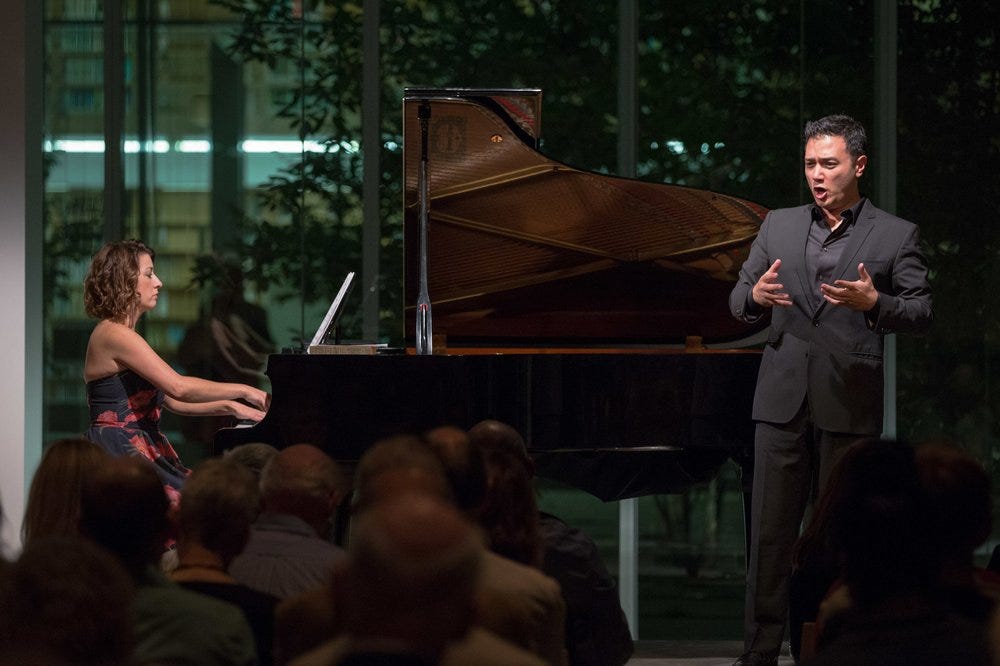
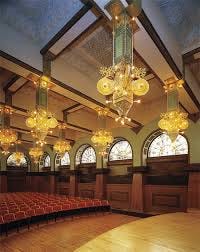
Songs@Six performances are held in the Sullivan Room of Roosevelt University’s Auditorium Building, completed in 1889 as the masterwork of Dankmar Adler and Louis Sullivan, with a young Frank Lloyd Wright among the draftsmen. Once a ladies’ parlor, later Eleanor Roosevelt’s personal office during her tenure on the University’s Board of Trustees, the room overlooks lake Michigan and retains its Romantic-era grace: period furnishings, two fireplaces, and - crucially - no stage. Singers perform at floor level, breathing the same air as their audience. It is, in every meaningful sense, a 19th-century salon, precisely where art song was born.

The alchemy that follows is something conservatory training rarely replicates. These are not parents and well-wishers, not a faculty jury, but listeners who have sought out art song, who arrive already fluent in its pleasures and demands. And the absence of a stage removes more than a platform. It removes permission to remain passive, for performers and listeners alike. Thanks to the generosity of an early donor, each concert includes a reception, where performers linger with their audience, fielding questions, receiving warmth, learning to foster connection. For a genre whose soul lives in the space between performer and listener, that is no small thing.
Artists discover, sometimes for the first time, what it feels like to truly communicate rather than demonstrate. This is work that the voice and opera programs at CCPA do exceedingly well - and which makes partnerships with vanguard organizations like Art Song Chicago not just possible, but a natural fit. Young musicians need mentorship, yes, but they also need audiences. And audiences, it turns out, need young artists, too. That is the work we are passing forward together, and the conversation I hope continues well beyond any single initiative.


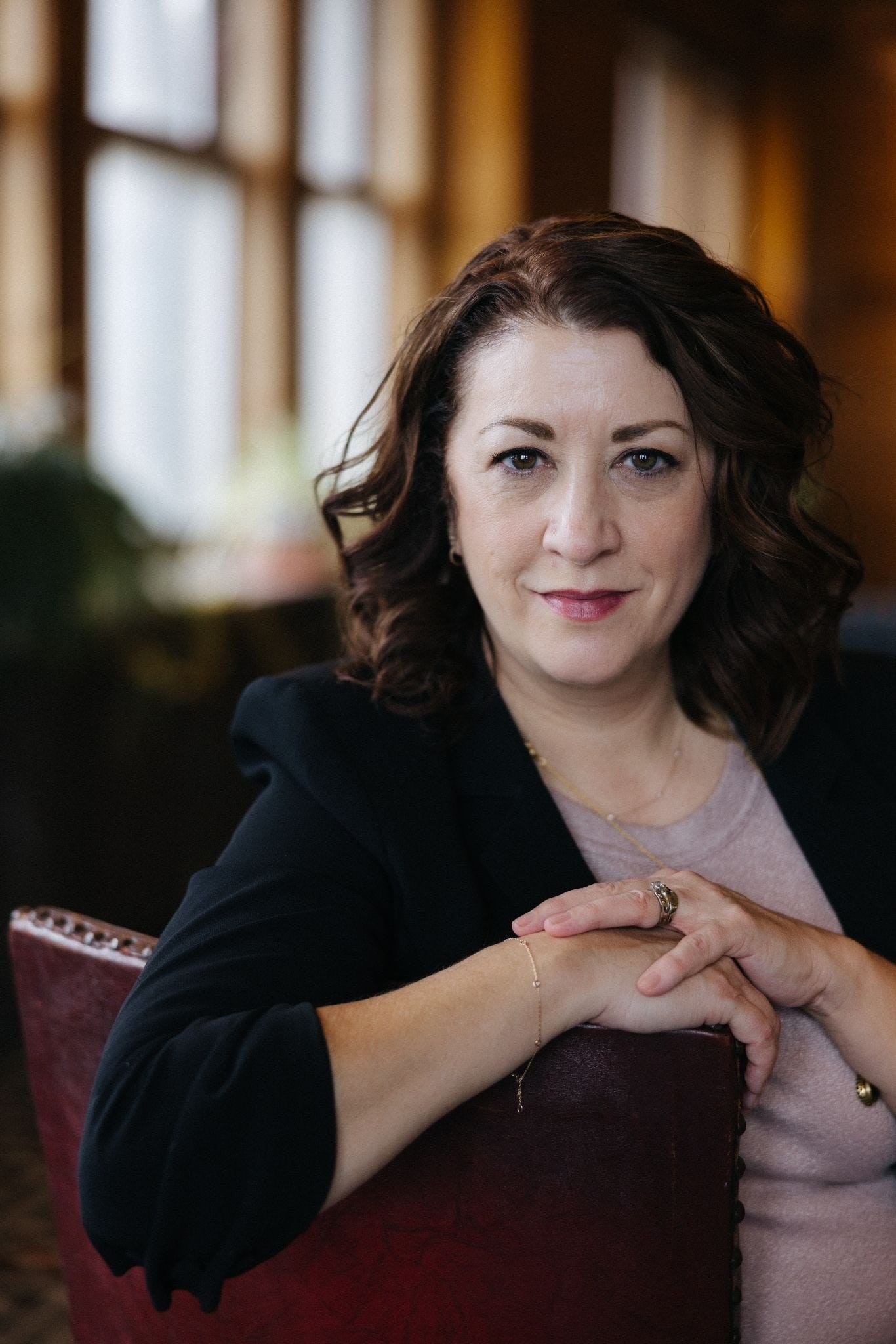
Pianist Shannon McGinnis has been recognized for her partnerships with leading artists in the classical vocal world. Recent highlights include recitals with soprano Olivia Boen and tenor Karim Sulayman, debuts with the Philadelphia Chamber Music Society and San Francisco Performances, and appearances recorded at Ravinia Festival’s Bennett Gordon Hall and broadcast on WFMT. In summer 2026 McGinnis appears at the Chamber Music America National Conference in Chicago, IL, as a panelist for “The Voice in Chamber Music” and as a featured performer at the Conference’s final gala, representing Art Song Chicago, this year’s Collaborator-in-Residence. McGinnis serves Associate Dean and tenured Associate Professor of Opera at the Chicago College of Performing Arts at Roosevelt University and is a co-founder of Art Song Chicago. She holds a Doctor of Musical Arts from the University of Michigan, where she studied with Martin Katz.
Barcelona Festival of Song: A Living Laboratory of Art Song Beyond the Canon by Patricia Caicedo
I am delighted to share my connection to art song with the readers of Art Song Canada. Those drawn to this repertoire often share a sensitivity to poetry, language, and the relationship between music, memory, and identity.
My journey began early. I started singing at twelve, immersed in Latin American folk traditions in my native Spanish while studying piano and Western classical music at the conservatory. Later, during vocal training, I entered another world: Italian, German, and French repertoire. Spanish disappeared from my musical life. I was learning to sing beautifully, but in languages that did not carry my memories or cultural references. Losing that connection between language and feeling was like losing part of myself.
Everything changed when my first voice teacher introduced me to Spanish-language repertoire. I discovered Latin American art song, particularly Cinco canciones populares argentinas by Alberto Ginastera. In those songs, I found a synthesis of folk traditions and classical form, and a reflection of my own identity. They showed me that the languages and sounds that had shaped me could also belong in the concert hall.
As I explored this repertoire further, I encountered many obstacles. Scores were difficult to access, often out of print, unpublished, or hidden in archives. Concert programming favored the European canon, leaving Latin American and Iberian art song without visibility or support. I became not only a performer, but also a researcher, building a personal archive and advocating for music that deserved to be heard.
Nearly thirty years ago, I moved to Barcelona to commit fully to this path. I pursued doctoral studies in musicology and discovered Catalan art song, another tradition shaped by poetry, language, and cultural identity. As my collection grew to include thousands of works from Latin America and the Iberian Peninsula, I recognized a paradox: an immense repertoire exists, yet much of it remains invisible.
In response, I began recording and publishing. Since then, I have released eleven recordings devoted largely to Latin American and Iberian art song and have performed this repertoire internationally. In 2005, I released my first anthology of Latin American art song, including scores, IPA transcriptions, translations, and contextual essays. This project has grown into a collection of eighteen volumes through Mundo Arts Publications. The goal has always been practical and artistic: to give performers the tools they need to approach this music with linguistic accuracy, stylistic understanding, and emotional depth.
That same year, I founded the Barcelona Festival of Song. It is a ten-day immersive summer program dedicated to Iberian and Latin American art song in Spanish, Catalan, and Portuguese. The program brings together performance, scholarship, language, and cultural context. It was created to offer what I had once needed myself: a space where singers could encounter this repertoire seriously, with guidance and community.
The festival is intentionally small, with no more than fifteen singers, to allow for personalized work. Participants range from students to professionals and university faculty, creating an intergenerational space of exchange. There is no age limit; artistic growth belongs to every stage of life.
Each singer receives a personalized repertoire plan, tailored to their voice, interests, background, and artistic development. For some, it is a first encounter with Spanish, Catalan, or Portuguese repertoire. For others, it is a way to expand their artistic language and rethink what belongs on the recital stage.
The program includes diction training, lectures on historical and cultural context, and daily masterclasses. It culminates in two public concerts featuring participants, alongside guest artist performances and premieres of commissioned works. These concerts connect research, performance, and creation, allowing the festival to function as both a training program and a platform for repertoire development.
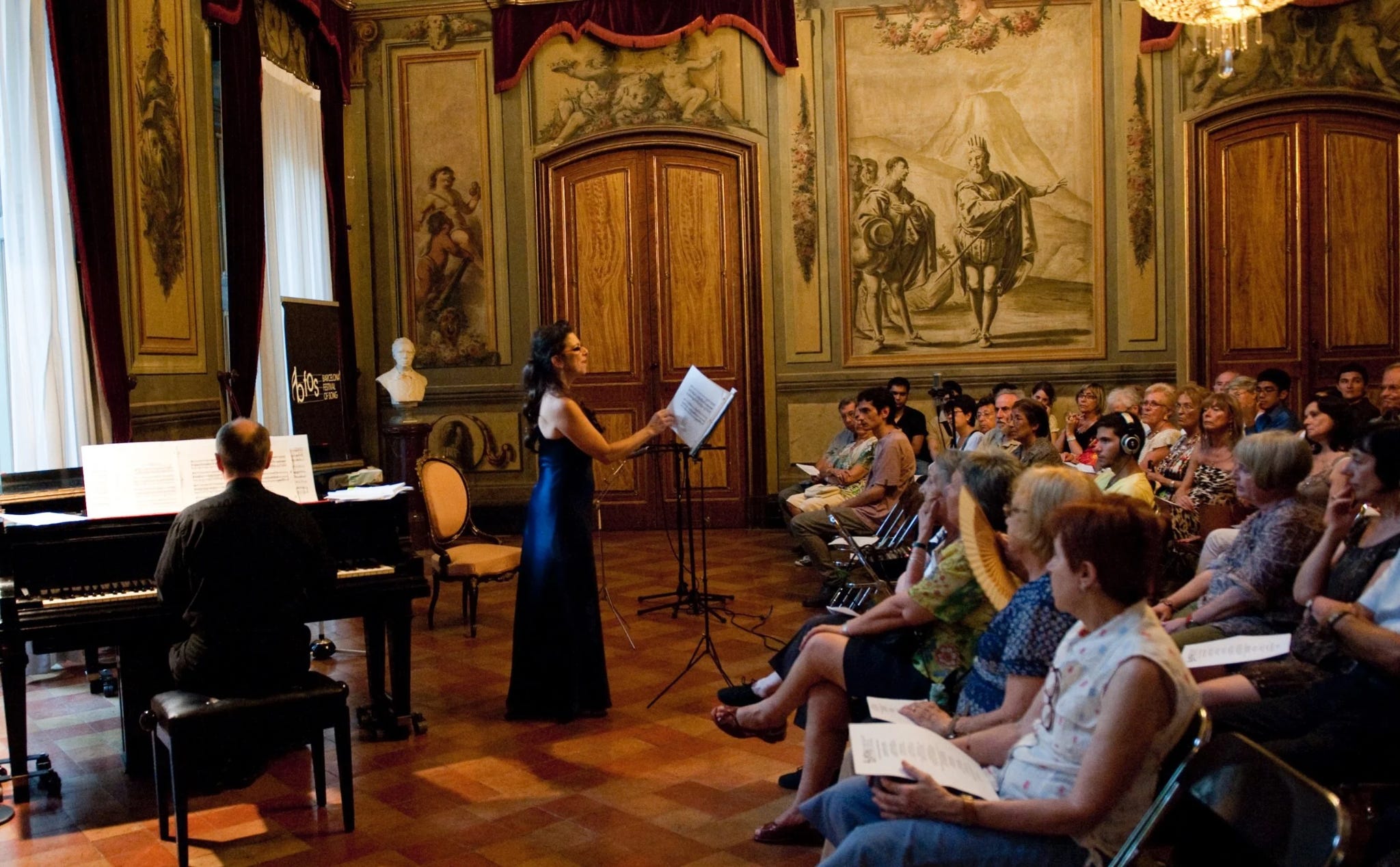
The festival is grounded in a decolonial perspective. It seeks to bring to the center musical traditions marginalized by Eurocentric narratives. Latin American and Iberian art song are not peripheral; they are essential. They carry histories of migration, language, resistance, hybridity, and imagination. They invite us to recognize that the art song tradition is broader, more multilingual, and more complex than the standard canon suggests.
Over time, the Barcelona Festival of Song has become a global reference point and a living laboratory of artistic creation. Its work extends beyond the summer program through publications, recordings, a monthly newsletter, and the podcast Resonances, which explores music, health, and identity.
In 2026, the festival enters a new phase. For the first time, concert tickets will support research on Parkinson’s disease, connecting artistic practice with social impact. This initiative reflects my work at the intersection of music and health, and my belief that music can contribute to individual and collective well-being.
Despite progress, much remains to be done. Musical institutions continue to operate within a narrow canon. Expanding this landscape requires sustained effort, collaboration, and vision.
The Barcelona Festival of Song stands as one response to this challenge: a space where repertoire, research, identity, and social purpose converge.
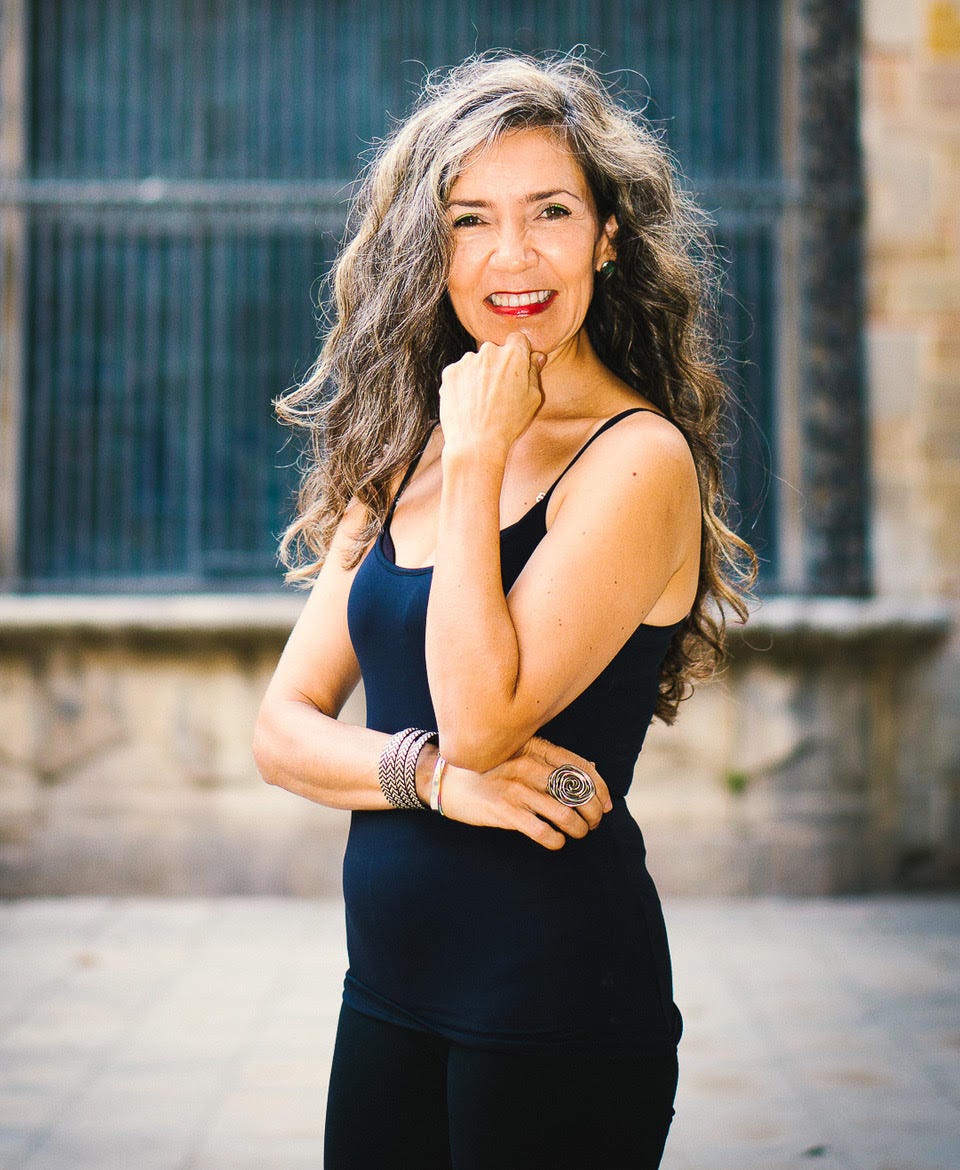
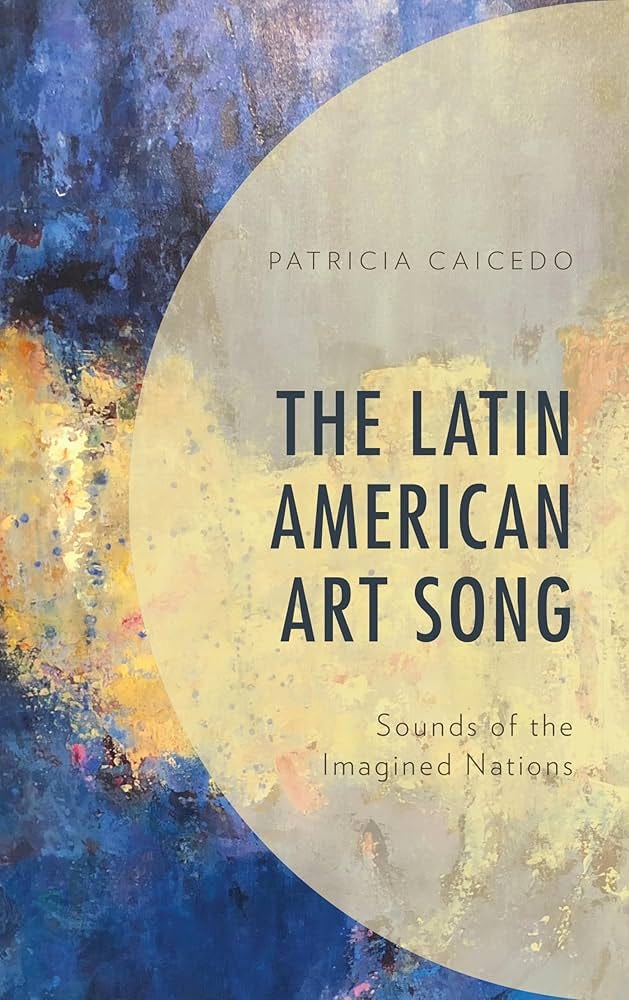
Patricia Caicedo is a soprano, musicologist, physician, and leading specialist in Latin American and Iberian art song. Her work explores the intersections of music, health, identity, and decolonial thought. She has released eleven albums and authored books, scholarly articles, and critical editions, including The Latin American Art Song: Sounds of the Imagined Nations and We Are What We Listen To: The Impact of Music on Individual and Social Health. She is the founder and director of the Barcelona Festival of Song, an international summer program dedicated to the study and performance of Latin American and Iberian vocal repertoire. A frequent guest at universities and conservatories worldwide, she offers lectures, masterclasses, and concerts. She created Mundo Arts, a music publisher, record label, and digital platform. She holds a Ph.D. in musicology and a Medical Doctor degree and hosts Resonances: Where Music, Health, and Identity Meet.

Rita Strohl’s Bilitis by Catherine St-Arnaud
I came upon Rita Strohl’s Chansons de Bilitis through my duo partner, Julien LeBlanc, in our constant searches for music written by women in French. As soon as I discovered its score and music, I became fascinated by Strohl’s lyricism and symbolist writing, yet extremely sensual in some songs. The song cycle was composed around the same time than Debussy’s famous setting of Pierre Louÿs’ texts but contains this time 12 songs (2 texts in common with Debussy, who wrote 3 in total). It was published in 1900 by Toledo. Amongst my favorites: “La chevelure” for the beauty of its melodic lines, “Bilitis” which is sung almost all a cappella (but beware of the tuning, because the piano comes back at the very end!), and “La flûte de Pan”, which starts in a very similar way to Debussy’s music on the same poem, with a mystical ascending scale.
It’s interesting to compare the musical choices between Debussy and Strohl of Louÿs’ texts, which he pretended to be written by an Ancient greek goddess named Bilitis. Some texts are literally a man’s fantasies of a woman’s free sexuality, including a few very questionable non-consensual moments with men, and some sapphic episodes. Although I appreciate the setting by Debussy, which is undeniably the most famous, I find that Strohl’s take on it gives the texts a little bit more femininity and ‘reality’. In my opinion, it almost becomes a feminist act to take back this narrative as women.2
Mostly, my dream is that we arrive at a point where we don’t ever have to precise the gender of the composers when they are not cisgendered men, because it would be natural to have such a variety of genders in the programming. But until then, let’s continue to bring forward all this beautiful music, which definitely deserves its place both in the intimate setting of recitals and with orchestras in bigger halls.
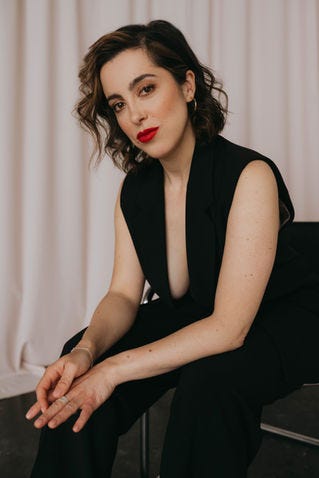
Catherine St-Arnaud is a multi-interest artist. She sings both opera and recitals, and also loves creating artistic projects in a collaborative spirit. Simultaneously, she enjoys writing and participating in radio shows.
Editor’s note: Readers, do you have a little known song cycle you’d like to share with the Art Song Canada community? Write to us at info@artsongfoundation.ca to be featured!
Three other women have composed music on Louÿs’ Chansons de Bilitis: Odette Fayau (1933), Jeanne Bernard (1933) and Alina Piechowska (1970).